In 90 seconds, Kaitlyn Bartley explains 5 ways B2B CX is different.
This is an excellent explainer video, click on it above.
Want to put these B2B CX truths to work? Read the full report for four practices that will help you improve your customer surveys.
Interaction Metrics helps B2B companies uncover the drivers of customer loyalty and retention. Talk to us about your customers.
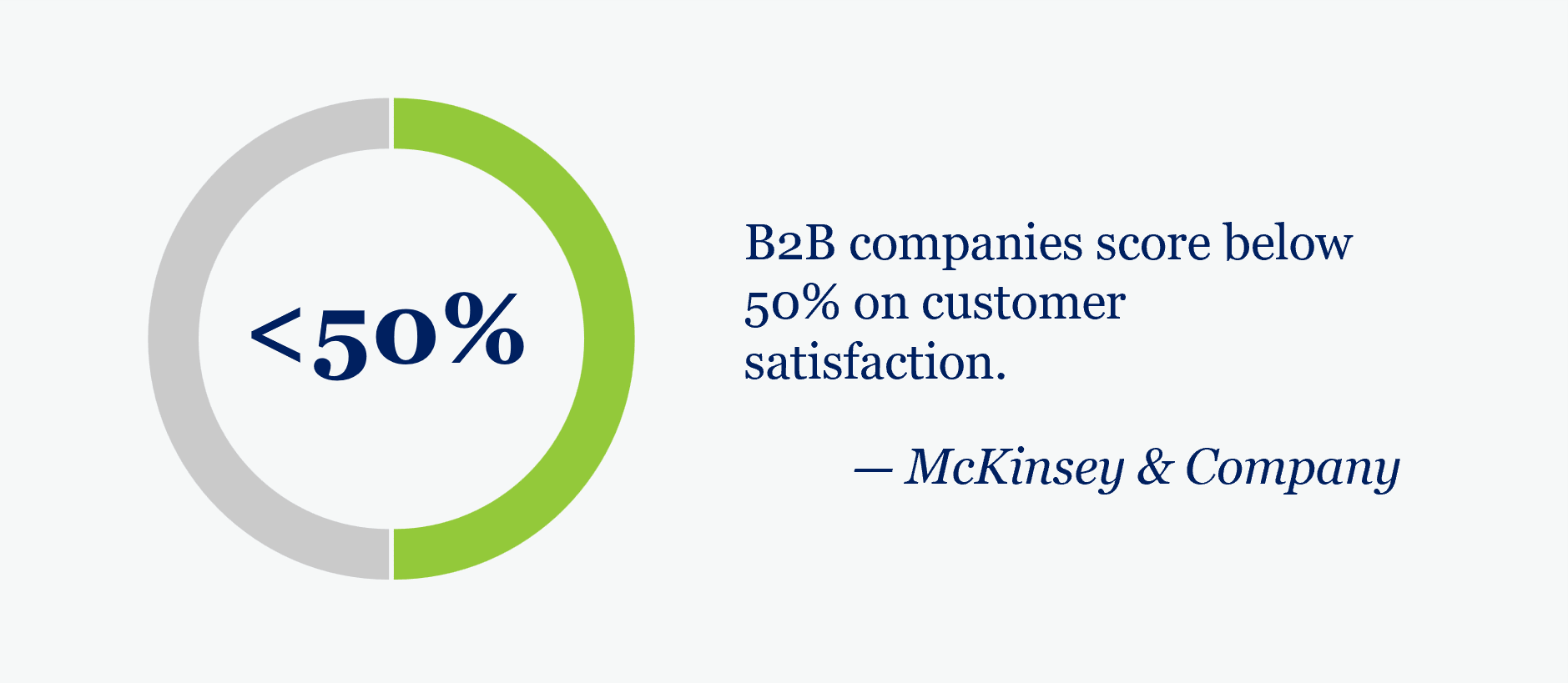
According to McKinsey & Company, B2B companies score below 50% on customer satisfaction—signaling a severe performance gap.
So why do B2B companies consistently underperform? Based on our survey audits, it is because most of them fail to capture meaningful customer feedback.
A primary culprit is that too often B2B organizations copy their satisfaction questions directly from consumer surveys. While borrowing certain practices from consumer counterparts makes sense, survey design is not one of them.
When B2B companies ask the wrong questions, they get blurry data and ambiguous next steps—making real customer experience insights out of reach.

What This Means:
Borrowing survey design from consumer brands quickly devolves into blurry data that misses the point.
To fix this, we’ll examine:
•The five truths that differentiate B2B from consumer CX.
•A few practices you can adopt immediately for more reliable and insightful B2B surveys.
THE B2B CX DIFFERENCE: 5 SURVEY TRUTHS
Truth 1: The B2B Spend
Most obviously, B2B customers differ from consumers because each customer relationship holds considerably more economic value.
For instance, a runner might spend $200–$400 on sneakers. By contrast, a retailer like Nordstrom or Big 5 Sporting Goods could spend millions on running shoes year over year.
The same pattern holds across consulting, manufacturing, distribution, technology, and other B2B industries. A single customer account can represent substantial recurring revenue—and losing one key relationship can meaningfully impact the business.
Sure, consumers make spendy purchases, like a car or a house, but those purchases are relatively infrequent, and any one consumer typically accounts for only a tiny fraction of a company’s revenue.
In B2B, there are fewer customers, relationships are worth more, and that value accumulates. Because of those factors, understanding and strengthening customer relationships is economically critical.
Why it Matters:
Higher stakes. Bigger impact. In B2B, losing one key customer can significantly hurt revenue, making accurate customer feedback essential.
Truth 2: Many Inputs with Broad Needs
B2B purchase decisions typically involve many influencers and decision-makers.
IT, Procurement, Account Managers, Directors, and other stakeholders all weigh in—each with different priorities, metrics for success, and concerns.
This means B2B organizations need to understand a broader set of needs, align across stakeholders, and deliver a consistent experience despite complex processes.
Truth 3: Customers are a Source of New Ideas
B2B customers are not just providing feedback; they can be a powerful source of innovation. Because they work so closely with your products and services, they often see opportunities, use cases, and market needs that internal teams miss.
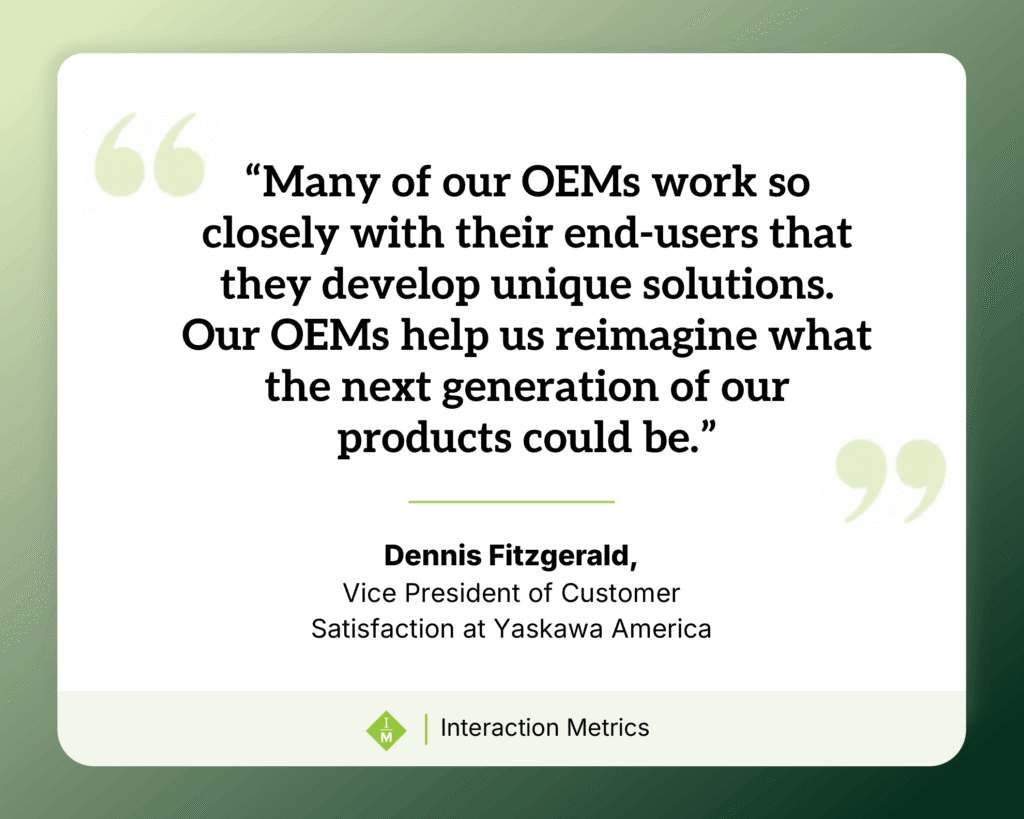
Dennis Fitzgerald, Vice President of Customer Satisfaction for Yaskawa America, says, “Many of our OEMs work so closely with their end-users that they develop unique solutions. Our OEMs help us reimagine what the next generation of our products could be.”
Expanding on this, Barbara Roos, Intel’s Head of Customer Advocacy & Culture, says their B2B customers are “intrinsically involved in product development—giving us feedback and telling us what their end customers want and need. They also keep us apprised of what trends are happening with their customers and how those trends then, in turn, impact what we develop and deliver with our products.”
What to Remember:
B2B customers are so involved in our business that meaningful, ongoing dialogue with them benefits both parties.
Truth 4: There’s Lots of Interaction!
B2B customer relationships are active and ongoing. As Mike Cross, Chief Customer Officer at CXera, explains, “You have to teach your B2B customers how to use your products, help them along the way, and check in to ensure they’re gaining value and having a good experience.”
In other words, B2B CX involves multiple touchpoints across many departments. Customers interact through tech support, delivery, field service, account management, account reports, and more. On top of that, B2B customers often interact with their providers weekly or even hourly.
Truth 5: Customer Expectations are High
Because B2B relationships carry so much value, customer expectations are high from the start. And of course, everyday consumer experiences shape those expectations. For example, accustomed to the seamless service offered by companies like Amazon, Apple, and Uber, B2B customers don’t see why doing business with other companies should be difficult.
But expectations run high for yet another reason: B2B buyers usually do considerable research before choosing a vendor. They have compared alternatives, identified what they need, and deliberately chosen you.
Mike Cross points out that “B2B buyers are doing a lot of due diligence upfront, allowing them to find a company they think will fit what they need. If they choose you, you have a limited window to meet their expectations, or they’ll get frustrated and spare no words in letting you know.”
Want customer surveys that reflect how B2B relationships actually work? Get in touch.